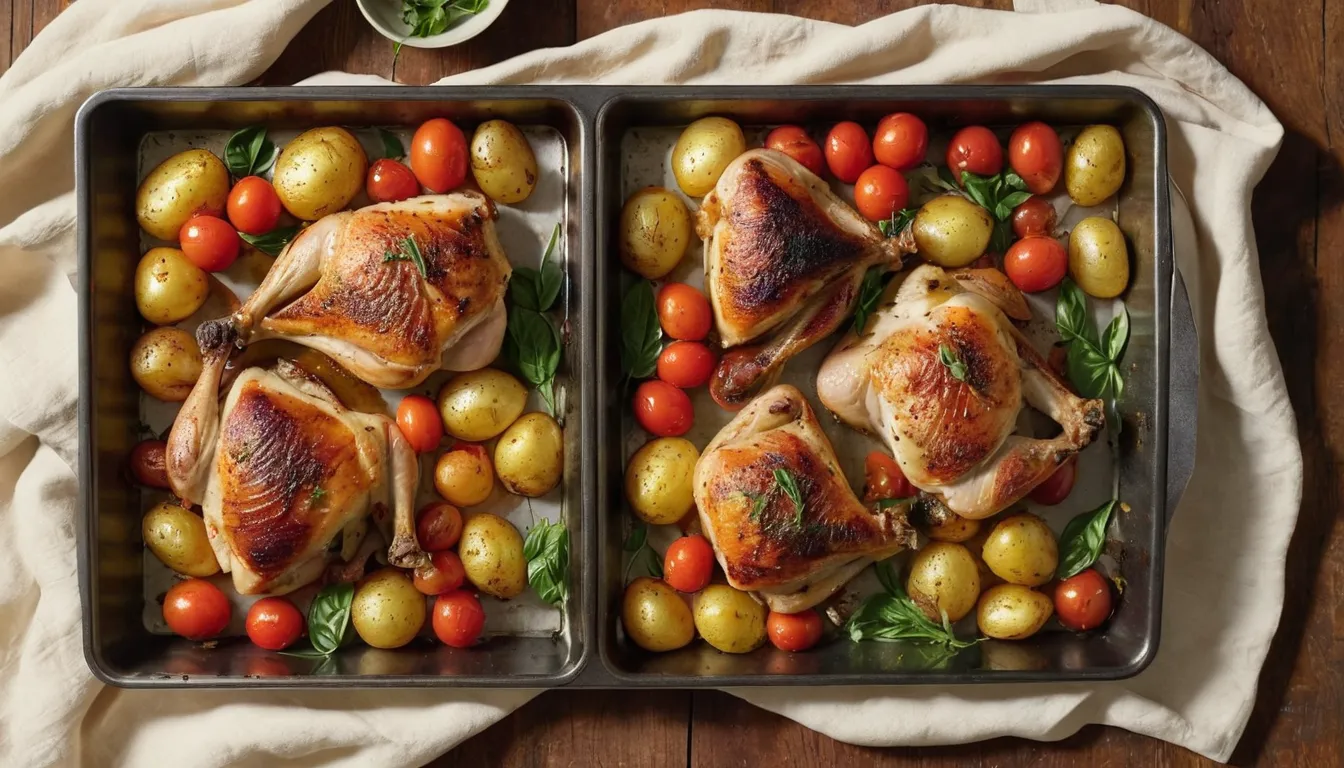
Pick where to start
Most cooking help assumes you have time, a full pantry and one dish to think about. Home cooking rarely works that way. You come home hungry, there is half a bag of potatoes and some chicken, and someone wants dinner in forty minutes. The guides here start from that kitchen.
Weeknight meals
Five dinner patterns you can repeat all week with different ingredients, plus a simple plan for the shopping.
Sheet-pan dinners
One pan, one oven, and a map of where each ingredient goes and when it goes in.
Cooking for a crowd
Feeding eight or twelve people at home without running out of oven space or patience.
Safe temperatures
The numbers worth knowing by heart, from chicken to leftovers, and how to use a thermometer.
A dinner on one pan
The map below shows the idea behind our sheet-pan guide. Each block is where an ingredient sits on the tray, and each bar shows how long it spends in the oven. Slow items go in first, quick ones join later, and everything finishes together.
Chicken thighs, potatoes and carrots
- Potatoes, 1-inch chunks40 min
- Carrots, thick coins40 min
- Bone-in chicken thighs40 min
- Red onion wedges25 min
Done when: Chicken reads 165°F in the thickest part, away from the bone. Potatoes are crisp at the edges.
Salmon, broccoli and crisp chickpeas
- Chickpeas, drained and dried25 min
- Broccoli florets17 min
- Salmon fillets13 min
Done when: Salmon reads 145°F and flakes with a fork. Chickpeas are dry and crunchy.
Five habits that make cooking easier
- Read the recipe to the end first. Marinating times, oven preheating and resting steps hide in the middle of the method.
- Prep before the heat goes on. Chop, measure and open cans first. Cooks call this mise en place, and it stops things burning while you hunt for the cumin.
- Preheat properly. A hot pan and a fully heated oven brown food. A cold one steams it.
- Season in stages. A little salt early, then taste near the end and adjust. It is easy to add salt and hard to remove it.
- Trust a thermometer over a timer. Times in any recipe are estimates. Internal temperature tells you when meat is safe. See safe temperatures.
Kitchen basics, without the gadget aisle
You can cook nearly everything on this site with a sharp chef's knife, a big cutting board, a heavy skillet, a pot with a lid, a rimmed sheet pan and an instant-read thermometer. Our kitchen tools guide covers what each piece does and what to look for, without naming brands. The cooking methods page explains roasting, sautéing, simmering and braising in plain terms, so a new recipe makes sense even before you start it.
A note on food safety. The temperatures and storage times here follow USDA guidance as of 2026. Rules get reviewed, so check FoodSafety.gov for the current chart, and ask a doctor about food allergies or special diets.
Common questions
Do I need special equipment to use these guides?
No. A standard home oven, a stovetop and a few basic pans are enough. Where a tool helps a lot, like a food thermometer, we say why.
Are the cooking times exact?
No. Ovens run hot or cool, pans differ, and pieces are cut in different sizes. Use the times as a guide, and check doneness by look, texture and temperature.
Who writes The Feasty Kitchen?
The site publishes general cooking guides under one name, The Feasty Kitchen. We don't feature personalities or sell anything. The about page explains how the guides are put together.